If you’re new to RC gliders, one of the most confusing parts of learning to fly is understanding what each control surface actually does—and when to use it.
Unlike powered planes, gliders rely heavily on smooth, coordinated control inputs. Knowing how the rudder, elevator, and ailerons work together will make your flights smoother, safer, and far more predictable.
This guide breaks down each RC glider control surface in simple terms, explains how they affect flight, and helps you understand why beginner gliders are designed the way they are.
What Are Control Surfaces on an RC Glider?
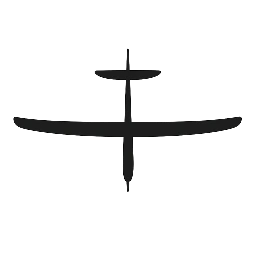
Control surfaces are the movable parts of the wings and tail that allow you to steer and control your glider in the air. Each surface changes airflow over the aircraft, causing it to pitch, yaw, or roll.
Most beginner RC gliders use two to four control surfaces, depending on complexity and skill level.
Elevator (Pitch Control)
The elevator is located on the horizontal tail surface (the stabilizer) and controls pitch—whether the glider’s nose goes up or down.
What the Elevator Does
- Pulling elevator up raises the nose
- Pushing elevator down lowers the nose
- Controls climb angle and descent rate
Why It Matters for Beginners
The elevator is the most important control surface on a glider. Too much elevator can cause a stall, while too little can lead to fast dives.
Beginner gliders are designed with:
- Gentle elevator response
- Stable tail geometry
- Forgiving stall behavior
👉 Tip: Smooth, small elevator inputs are key to long, efficient glides.
Rudder (Yaw Control)
The rudder is mounted on the vertical tail fin and controls yaw, which is the left-to-right movement of the nose.
What the Rudder Does
- Turns the glider left or right
- Helps coordinate smooth turns
- Keeps the nose aligned in flight
Why Many Beginner Gliders Use Rudder-Only Turning
Many entry-level RC gliders use rudder + elevator only, without ailerons. These gliders rely on:
- Dihedral or polyhedral wings
- Natural roll caused by yaw
When rudder is applied, the glider yaws, the wing geometry causes it to bank, and the glider turns smoothly—perfect for beginners.
Ailerons (Roll Control)
Ailerons are located on the wings and control roll, meaning how much the glider banks left or right.
What Ailerons Do
- Roll the glider into turns
- Allow more precise control
- Enable steeper bank angles
Are Ailerons Good for Beginners?
Yes—but not always necessary at first.
Many beginner gliders:
- Skip ailerons for simplicity
- Use rudder-based turning instead
- Focus on smooth, stable flight
As skills improve, ailerons allow:
- Better wind handling
- More precise landings
- Coordinated turns
How Control Surfaces Work Together
In real flight, control surfaces don’t work alone.
A smooth turn typically involves:
- Rudder or aileron to start the turn
- Elevator to maintain altitude
- Gentle coordination to avoid stalling
Beginner pilots often over-control, which is why gliders are designed to naturally self-correct.
Common Beginner Mistakes with Control Surfaces
Using Too Much Elevator
- Causes stalls and mushy flight
- Especially common during launch
Overcorrecting Turns
- Leads to wobbling or oscillation
- Small inputs work best
Incorrect Servo Direction
- A common setup error
- Always check surface movement before flying
👉 This is why preflight checks are critical.
How Many Control Surfaces Do Beginners Really Need?
| Skill Level | Typical Setup |
|---|---|
| Absolute Beginner | Rudder + Elevator |
| Beginner–Intermediate | Rudder, Elevator, Ailerons |
| Intermediate+ | Full control with flaps |
Most pilots start simple and add complexity as confidence grows.
Why RC Gliders Are So Forgiving
RC gliders are designed with:
- Long wingspans
- Stable tail surfaces
- Gentle control throws
This allows new pilots to focus on learning airflow and energy management, not fighting the aircraft.
Related Beginner Guides
- How to Launch an RC Glider Safely
- How to Land an RC Glider Smoothly
- RC Glider vs Powered Plane
- 2-Channel vs 3-Channel vs 4-Channel RC Gliders
Final Thoughts
Understanding RC glider control surfaces is a huge step toward flying confidently and safely. Once you know what each surface does and why, flying becomes less stressful—and far more enjoyable.
Master smooth inputs, let the glider do the work, and you’ll be soaring comfortably in no time.