Launching an RC glider correctly is one of the most important skills for beginner pilots. A poor launch can end a flight before it even begins, while a smooth, controlled launch sets you up for a calm, successful flight.
This guide walks through the safest and most reliable ways to launch an RC glider, common mistakes beginners make, and simple tips to improve your odds of a clean takeoff every time.
Before You Launch: Quick Safety Checklist
Before launching any RC glider, take a moment to confirm the basics:
- Battery fully charged and secured
- Control surfaces moving in the correct direction
- Center of gravity (CG) set according to the manufacturer
- Flying area clear of people, pets, and obstacles
- Wind direction identified
Skipping these checks is one of the most common causes of failed launches.
Best Conditions for a Beginner Launch
For early flights, conditions matter more than technique.
Ideal conditions include:
- Light wind (0–5 mph)
- Smooth airflow with no strong gusts
- Large, open field with soft ground
Avoid launching in strong or gusty winds until you’re comfortable with basic glider control.
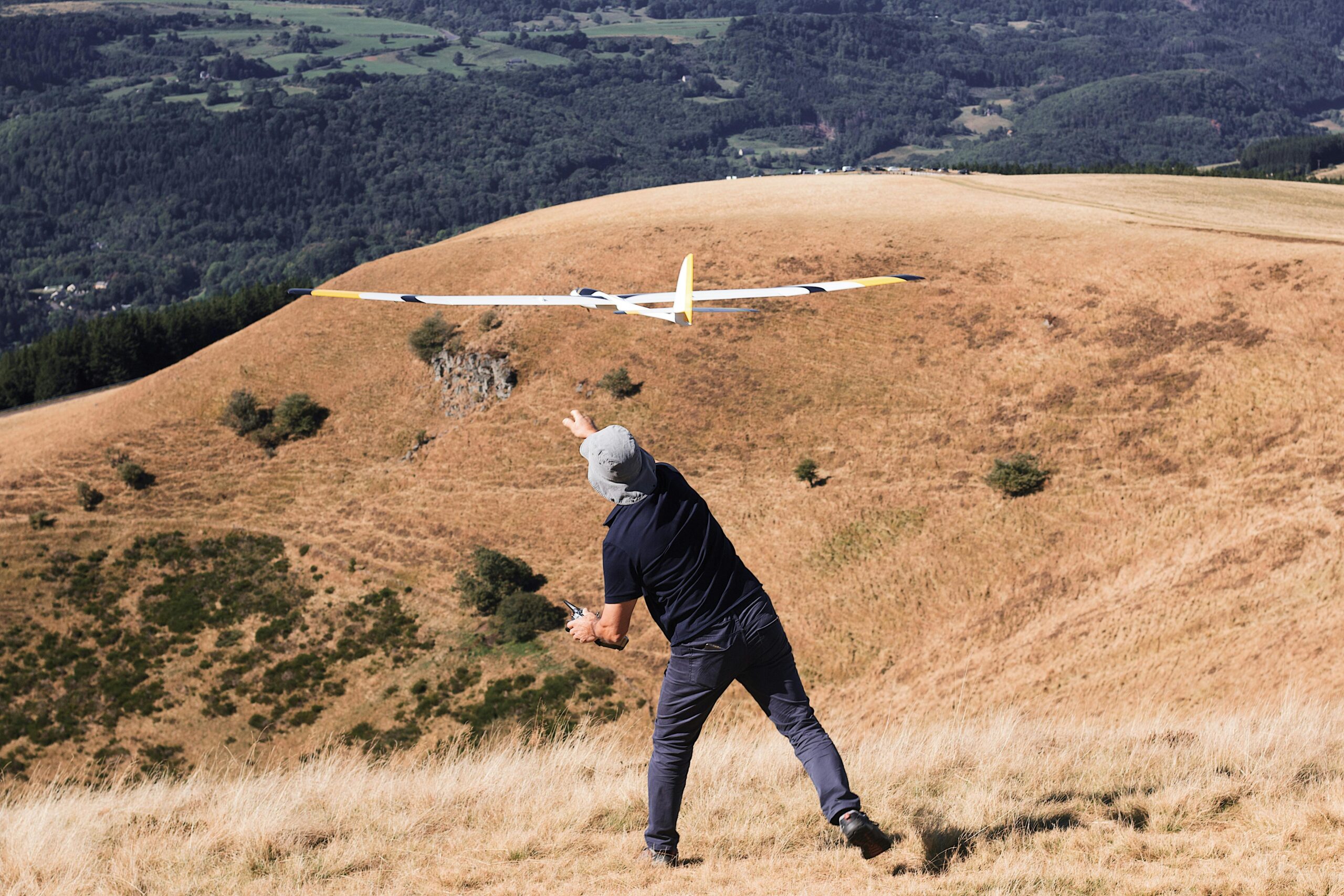
Hand Launching an RC Glider (Step by Step)
Most beginner electric gliders are designed to be hand launched.
Step 1: Power Setting
Set the throttle to about 60–70%, not full power. Too much throttle can cause a steep climb and stall.
Step 2: Grip the Glider
Hold the glider just behind the wing, keeping it level. Avoid squeezing the foam too tightly.
Step 3: Launch Angle
Aim for a slight upward angle, roughly 5–10 degrees above the horizon.
Step 4: Smooth Release
Push the glider forward with a firm, level motion. Do not throw it upward.
Step 5: Let It Fly
Once airborne, keep control inputs gentle and allow the glider to gain airspeed before climbing.
Using a Powered Takeoff (If Applicable)
Some larger gliders can be launched from smooth grass or hard surfaces.
- Gradually apply throttle
- Maintain straight tracking
- Gently rotate once airspeed builds
This method is less common for beginners but works well in the right conditions.
Common Beginner Launch Mistakes
Avoid these frequent errors:
- Throwing the glider upward instead of forward
- Using full throttle immediately
- Launching with incorrect CG
- Overcorrecting immediately after launch
- Flying in wind that’s too strong
Most crashes happen within the first few seconds of flight.
What to Do If the Launch Feels Wrong
If the glider:
- Dives → reduce throttle slightly and level out
- Stalls → lower the nose and allow airspeed to build
- Veers sharply → gently correct and stabilize before climbing
Resist the urge to panic — small, smooth inputs work best.
Final Tips for First Flights
- Practice launches during calm mornings or evenings
- Keep first flights short
- Focus on smooth, relaxed control
- Land early rather than forcing extra airtime
Launching cleanly builds confidence and dramatically improves the learning experience.
Related Reading
- Best RC Gliders for Beginners
- Common Beginner RC Glider Mistakes