If an RC glider doesn’t fly the way you expect—stalling, diving, or feeling unstable—the center of gravity (CG) is often the reason.
This guide explains what CG is, why it matters, and how it affects flight, without technical jargon.
What Is Center of Gravity?
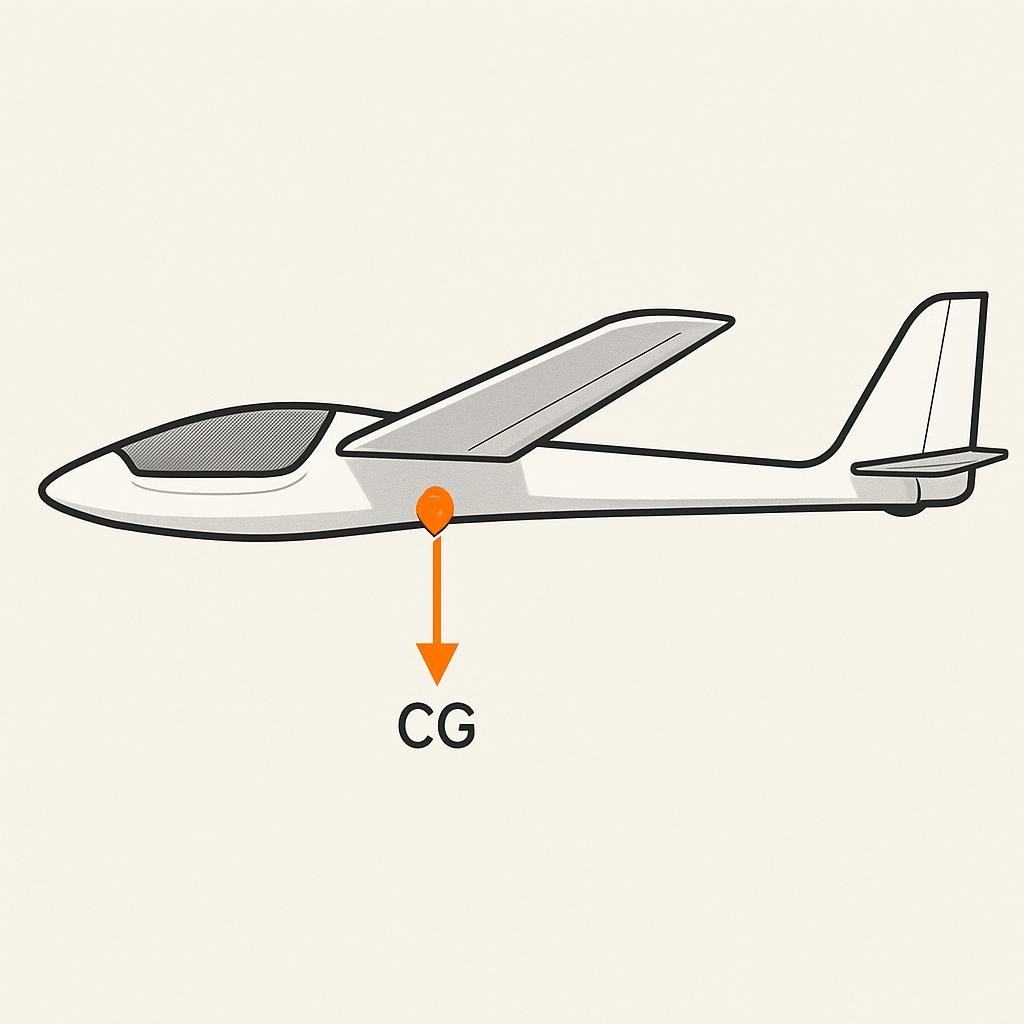
The center of gravity is the point where your glider’s weight is perfectly balanced.
If you could balance the glider on your fingers at that spot, it wouldn’t tip forward or backward.
Why CG Is Critical for RC Gliders
Gliders rely on aerodynamic balance, not power.
Incorrect CG can cause:
- Unstable flight
- Poor glide performance
- Unexpected stalls
- Difficult landings
A properly balanced glider will:
- Fly hands-off
- Recover gently from disturbances
- Glide smoothly with minimal input
Nose-Heavy vs Tail-Heavy CG
Nose-Heavy Glider
Symptoms:
- Needs constant elevator input
- Descends quickly
- Feels “heavy” on the controls
Beginner Verdict:
✅ Safer than tail-heavy
❌ Reduced glide performance
Tail-Heavy Glider
Symptoms:
- Sudden stalls
- Porpoising (up-down oscillation)
- Extremely sensitive elevator
Beginner Verdict:
❌ Dangerous
❌ Avoid at all costs
👉 When in doubt, slightly nose-heavy is always safer.
Where Is the CG Located?
Most manufacturers specify CG as:
- A distance behind the leading edge of the wing
- Typically 25–33% of chord length
Always start with the manufacturer’s recommended CG.
How CG Affects Control Surfaces
- Elevator becomes overly sensitive when tail-heavy
- Rudder turns feel sloppy if CG is off
- Aileron response becomes unpredictable
CG problems often feel like “control problems.”
Common Beginner CG Mistakes
- Ignoring CG after changing batteries
- Guessing instead of measuring
- Flying tail-heavy “to improve glide”
- Not rechecking after repairs
Related Beginner Guides
- How to Balance an RC Glider Properly
- RC Glider Control Surfaces Explained
- Why Your RC Glider Keeps Stalling
- RC Glider Preflight Checklist
Final Thoughts
CG is not optional. It’s foundational.
Get the CG right first—then adjust control throws and trims.