
Choosing the right RC receiver is just as important as choosing the right transmitter—especially for beginner RC glider pilots. The receiver is what connects your transmitter to your aircraft, and choosing an incompatible or overly complex receiver can lead to binding issues, setup frustration, or unreliable control.
In this guide, we’ll explain what RC receivers do, how to choose the right one for your transmitter, and highlight beginner-friendly receiver options that work well with popular RC gliders.
What Is an RC Receiver?
An RC receiver is the electronic component inside your glider that receives signals from your transmitter and sends them to the servos and motor controller.
Each control function—throttle, elevator, rudder, ailerons, flaps—uses a receiver channel. The receiver must be compatible with both:
- Your transmitter’s protocol
- The number of channels your glider requires
🔗 New to RC electronics? See RC Glider Basics for Beginners.
How Many Channels Does a Beginner RC Glider Receiver Need?
Most beginner gliders require:
- 3 channels – Throttle, elevator, rudder
- 4 channels – Adds ailerons (recommended)
- 5–6 channels – Adds flaps or spoilers (upgrade gliders)
Beginner Recommendation
Choose a 6-channel receiver, even if your current glider only needs 4. This gives you room to grow without replacing equipment later.
Key Receiver Features Beginners Should Look For
Not all receivers are created equal. Beginners should prioritize reliability and compatibility over advanced telemetry.
Important features:
- Compatible protocol with your transmitter
- Adequate channel count (minimum 6)
- Small size and light weight
- Easy binding process
- Widely available replacements
Advanced features like telemetry and diversity antennas are optional and not required for beginner flying.
Best RC Receivers for Beginners
⚠️ Important: Receivers must match your transmitter brand or protocol. Always confirm compatibility before purchasing.
Best Budget Beginner Receiver
FlySky FS-iA6B
Compatible with: FlySky transmitters (FS-i6X)
Why it’s great for beginners:
- 6 channels
- Affordable
- Easy binding
- Compact and lightweight
- Widely available
Best for:
Budget-conscious beginners using FlySky transmitters.
Things to keep in mind:
Build quality is basic, but reliability is solid for beginner gliders.
Best Overall Beginner Receiver
Spektrum AR620
Compatible with: Spektrum DSMX transmitters (DX6e, etc.)
Why it stands out:
- 6 channels
- Excellent signal reliability
- Compact size for gliders
- Seamless BNF compatibility
- Strong documentation and support
Best for:
Beginners flying E-flite or Horizon Hobby gliders.
Things to keep in mind:
Costs more than budget receivers, but setup is extremely smooth.
Best Upgrade / Long-Term Receiver
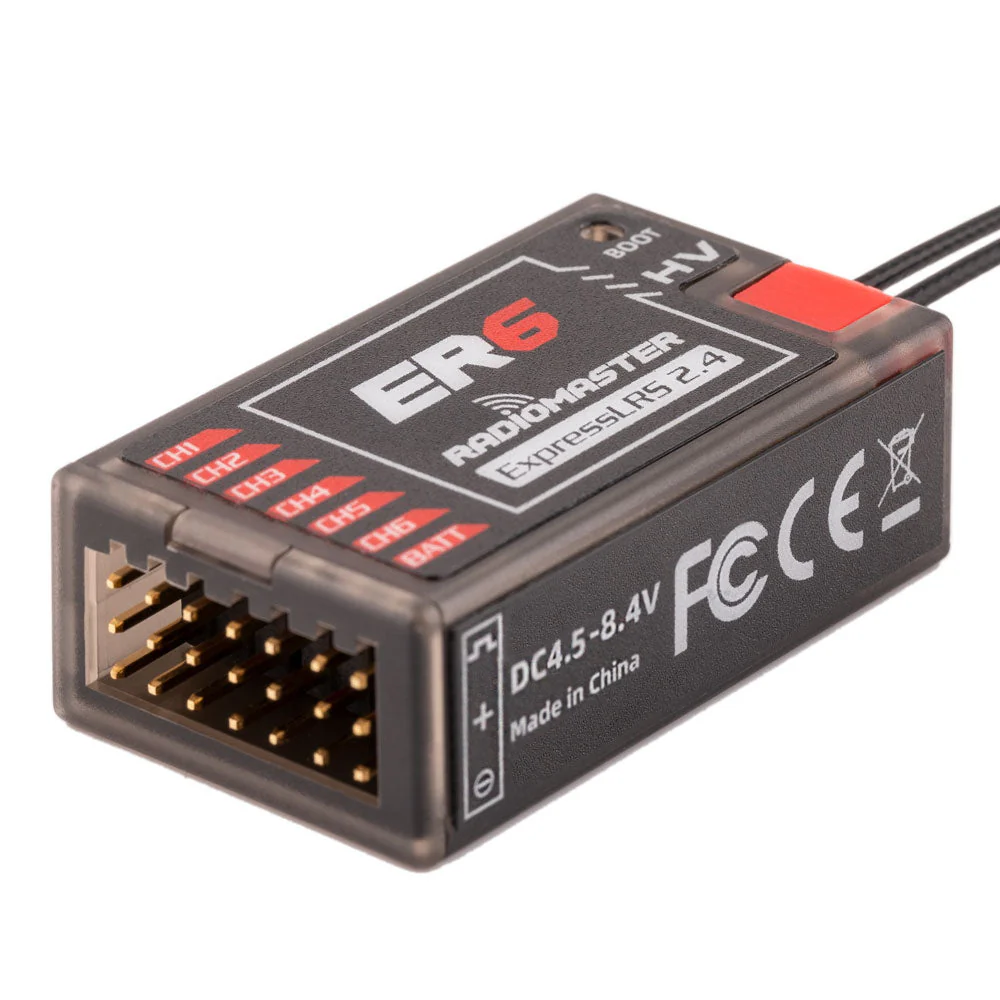
RadioMaster R168 / ER6 (Protocol Dependent)
Compatible with: Multi-protocol transmitters (TX16S)
Why it’s a great upgrade:
- 6–8 channels (model dependent)
- Excellent value
- Supports advanced features later
- Compact for sailplanes
Best for:
Pilots planning to fly multiple aircraft or upgrade transmitters.
Things to keep in mind:
Requires understanding of protocol selection on multi-protocol radios.
Where Should the Receiver Be Inrrstalled?
Receivers are typically installed:
- Near the aircraft’s center of gravity
- Away from motor and ESC wiring
- With antennas oriented per manufacturer instructions
Improper placement can reduce signal quality.
Common Beginner Receiver Mistakes
- Buying an incompatible receiver
- Choosing too few channels
- Poor antenna placement
- Forgetting to bind failsafe settings
- Mounting too close to power electronics
Avoiding these mistakes early improves safety and reliability.
🔗 Related: Common Beginner RC Glider Mistakes
Receiver vs RTF Electronics
RTF Gliders
- Receiver pre-installed
- Simplest setup
- Limited upgrade flexibility
Separate Receiver
- More control over setup
- Reusable across aircraft
- Better long-term value
Recommendation
RTF is fine to start, but learning receiver basics helps you grow as a pilot.
Final Recommendation for Beginners
Choose a receiver that:
- Matches your transmitter protocol
- Has at least 6 channels
- Is easy to bind and configure
- Has readily available replacements
You don’t need advanced features to fly safely—reliability and compatibility matter most.
🔗 Next Reads: